Gion Matsuri祇園祭
- Prefecture
- Kyoto · Kyoto
- Season
- SUMMER
- Type
- Festival
- Typical period
- Annually throughout July, from the Kippuiri rite on July 1 to the Ekijinja Nagoshi-sai on July 31
- 2026 Event status
- Period ended
01
IntroductionIntroduction
The festival of Yasaka Shrine in Kyoto: a month of Shinto rites and float ceremonies running from the Kippuiri on July 1 to the Ekijinja Nagoshi-sai on July 31.
Gion Matsuri is the festival of Yasaka Shrine, held to pray for protection from epidemics and misfortune. It opens with the Kippuiri on July 1; the floats are then assembled and displayed during the Yoiyama evenings, and the yama and hoko floats process on July 17 (Saki Matsuri) and July 24 (Ato Matsuri). On the 17th the shrine's mikoshi are carried to the Otabisho at Shijo Teramachi in the Shinkosai, and on the 24th they return to the shrine in the Kankosai. The festival closes with the Ekijinja Nagoshi-sai on July 31.
This is a religious rite rooted in a shrine or temple. Please follow the guidance of the organizers and clergy, and take care not to disrupt the ceremonies.
02
HistoryHistory
According to Yasaka Shrine, the festival traces back to 869 (Jogan 11), when an epidemic spread through the capital and beyond: 66 halberds, one for each province of the time, were raised and mikoshi were sent from the shrine to the Shinsen-en garden to pray for deliverance. The rite was originally called goryo-e. The Agency for Cultural Affairs notes that by the 14th–15th centuries the festival had taken shape around yama and hoko floats, and that by the late 16th century the townspeople were adorning them with lavish textiles and metalwork.
Source: 八坂神社(external site, opens in a new tab) / 文化庁(external site, opens in a new tab)
03
CultureCultural background
At its heart is a prayer for protection from plague and disaster, a faith also carried by the "Somin Shorai shison nari" amulet. The float ceremonies, from the lottery that fixes the procession order through float building, Yoiyama and the processions themselves, are run by neighbourhood organisations known as chōjū.
04
Rites & HighlightsMain rites & highlights
- 01
Kippuiri
The rite on July 1 that opens the festival.
- 02
Yoiyama
July 14–16 for the Saki Matsuri and July 21–23 for the Ato Matsuri, when the assembled floats stand in their neighbourhoods.
- 03
Yamahoko Junko (float processions)
The Saki Matsuri floats process on July 17 and the Ato Matsuri floats on July 24.
- 04
Shinkosai and Kankosai
On the 17th three mikoshi travel to the Otabisho; on the 24th they return to the shrine.
- 05
Ekijinja Nagoshi-sai
Held on July 31 at the Ekijinja within the precincts, closing the festival.
05
PeopleThe people
The float ceremonies are carried out by each neighbourhood's chōjū organisation; the designated preservation body is the Gion Matsuri Yamahoko Rengokai (a public interest foundation).
06
ScheduleSchedule
Typical period
Annually throughout July, from the Kippuiri rite on July 1 to the Ekijinja Nagoshi-sai on July 31
Source: 八坂神社(external site, opens in a new tab) / 京都市(external site, opens in a new tab)
2026EVENT STATUS
- Period endedFloat processions
Fri, 17 July 2026 – Fri, 24 July 2026
Dates of the first (July 17) and second (July 24) float processions. The rites of the festival span the whole of July.
Source: 京都市 — 祇園祭山鉾巡行(前祭・後祭)|【京都市公式】京都観光Navi(external site, opens in a new tab)
Last verified: Sat, 26 September 2026
07
LocationLocation
- Venue
- Yasaka Shrine and central Kyoto (Shijo, Kawaramachi and Oike streets, among others)
- Shrine / Host
- Yasaka Shrine
- Region
- Kyoto · Kyoto · Kyoto
08
GalleryGallery
Photo: Sakurai Midori / Wikimedia Commons / CC BY-SA 3.0 Photo: Hahifuheho / Wikimedia Commons / Public domain Photo: 江戸村のとくぞう / Wikimedia Commons / CC BY-SA 4.0 Photo: Marie-Sophie Mejan / Wikimedia Commons / CC BY 4.0
09
VideosVideos
Yasaka Shrine's record of the Gion Matsuri's Saki-matsuri (July 17) week held during the COVID-19 pandemic.Source: YouTube · 【公式】京都祇園 八坂神社 / Yasaka-jinja Shrine (Official (organiser)) · Watch on YouTube A 60-minute Japanese-language documentary on the Gion Matsuri Yamahoko float events by the Kyoto City Cultural Tourism Resources Protection Foundation.Source: YouTube · 公益財団法人 京都市文化観光資源保護財団 (Municipal (official)) · Watch on YouTube
We only include videos confirmed on each organisation's official site or channel, and whose embedding YouTube permits. Playback uses YouTube's official player; copyright remains with the rights holders. The YouTube player does not load until you press play.
10
How to VisitHow to visit
The float processions take place on July 17 (Saki Matsuri) and July 24 (Ato Matsuri). The City of Kyoto asks visitors to guard against heatstroke and to use public transport. Check the city's Kyoto Travel Navi for each year's traffic controls and seating information.
Traffic controls, seating and fees change every year. Always check the official website for the latest information.
Official website — yasaka-jinja.or.jp(external site, opens in a new tab)
11
EtiquetteEtiquette
- Follow the instructions of police and stewards
- Refrain from eating while walking
- Take precautions against heatstroke
- Use public transport
12
HeritageCultural heritage
UNESCO Intangible Cultural Heritage · 2009
UNESCO Intangible Cultural Heritage (Representative List)
Designated subject: Yamahoko, the float ceremony of the Kyoto Gion festival (inscribed 2009; extended in 2016 as part of "Yama, Hoko, Yatai, float festivals in Japan")(Festival as a whole)
Source: 京都祇園祭の山鉾行事 - 文化遺産オンライン(external site, opens in a new tab)
National designation · 1979
Important Intangible Folk Cultural Property
Designated subject: Float ceremonies of the Kyoto Gion Festival (Kyoto Gion Matsuri no Yamahoko Gyoji)(Festival as a whole)
Source: 京都祇園祭の山鉾行事 - 文化遺産オンライン(external site, opens in a new tab)
National designation · 1962
Important Tangible Folk Cultural Property
Designated subject: Gion Matsuri Yamahoko (29 floats)(Floats)
Source: 祇園祭山鉾 - 文化遺産オンライン(external site, opens in a new tab)
13 — Nearby in the region
15
SourcesSources & references
- 1.祇園祭|主な神事・行事|八坂神社(external site, opens in a new tab)八坂神社 · Accessed 2026-09-26
- 2.祇園祭「どんな祭?」|【京都市公式】京都観光Navi(external site, opens in a new tab)京都市 · Accessed 2026-09-26
- 3.祇園祭山鉾巡行(前祭・後祭)|【京都市公式】京都観光Navi(external site, opens in a new tab)京都市 · Accessed 2026-09-26
- 4.京都祇園祭の山鉾行事 - 文化遺産オンライン(external site, opens in a new tab)文化庁 · Accessed 2026-09-26
- 5.祇園祭山鉾 - 文化遺産オンライン(external site, opens in a new tab)文化庁 · Accessed 2026-09-26
- 6.「山・鉾・屋台行事」のユネスコ無形文化遺産登録(代表一覧表記載)について(external site, opens in a new tab)文化庁 · Accessed 2026-09-26
16
Image CreditsImage credits
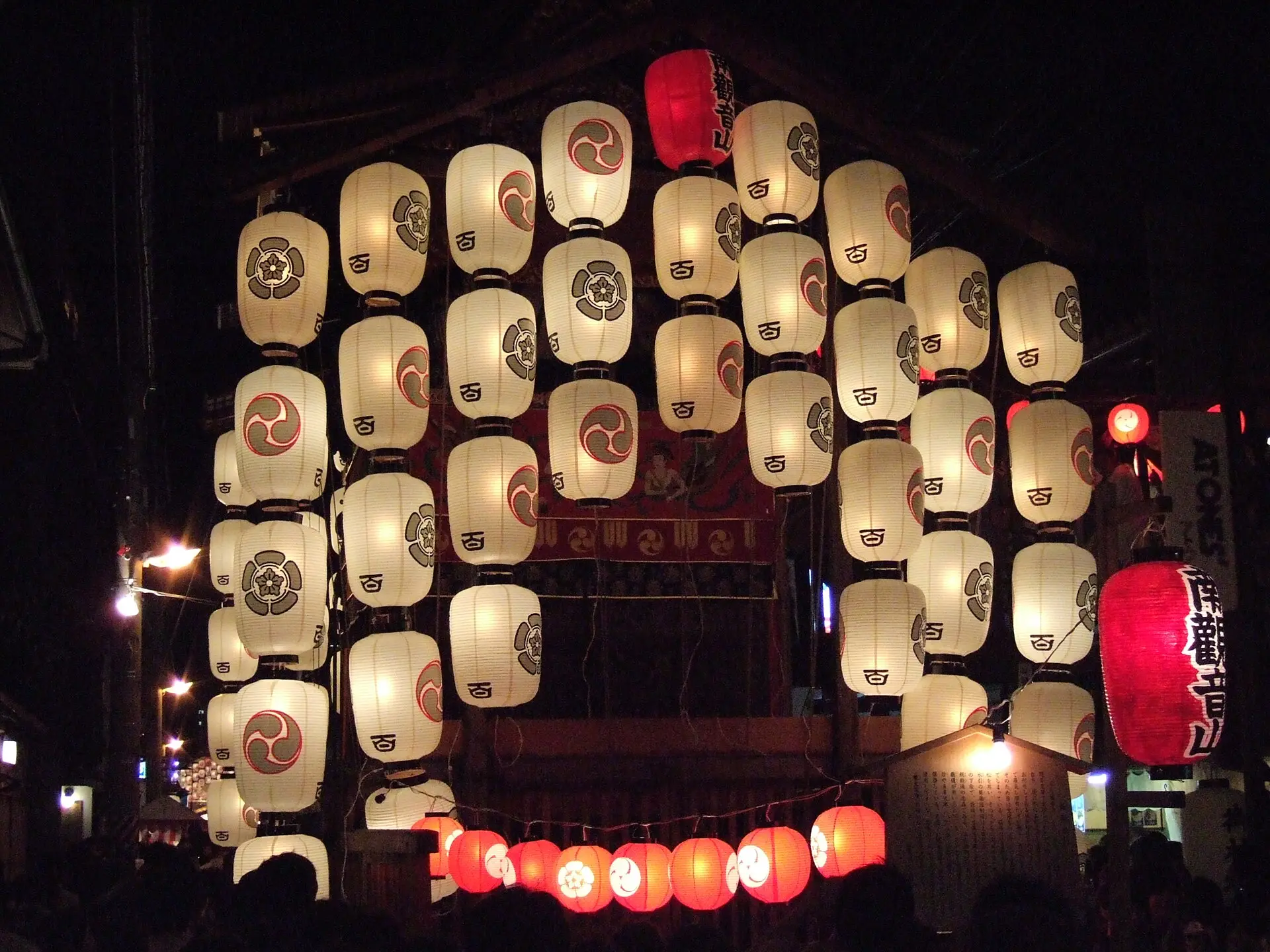
The Minami Kannonyama float glowing with tiers of paper lanterns on a Gion Matsuri Yoiyama night
- Photographer
- Sakurai Midori
- Source
- Minami Kannonyama Gion Matsuri Yoiyama.jpg(external site, opens in a new tab)
- Licence
- CC BY-SA 3.0(external site, opens in a new tab)
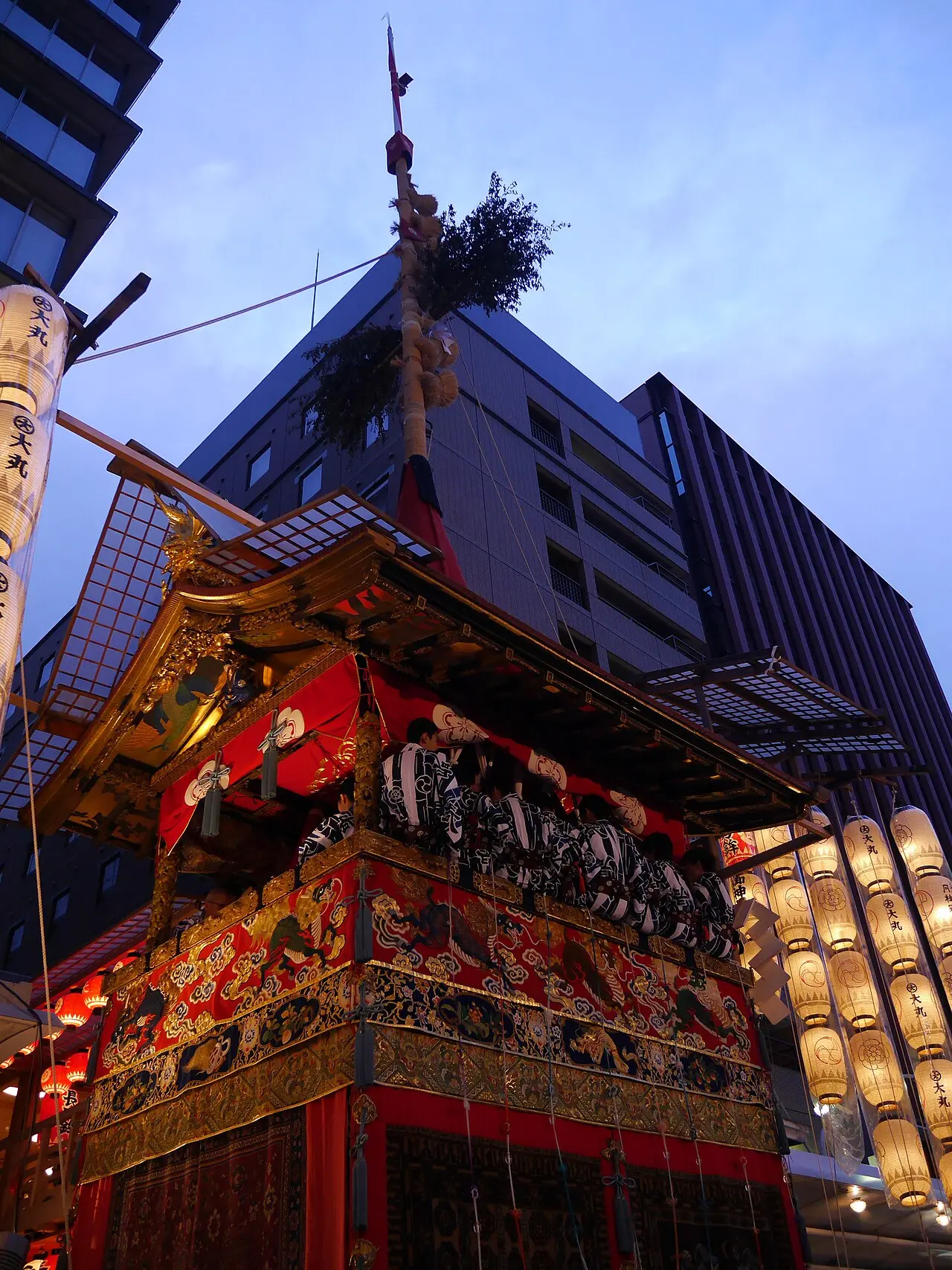
Looking up at the Naginata-boko float at dusk during Yoiyama, its mast rising and lanterns lit
- Photographer
- Hahifuheho
- Source
- Naginatahoko at Gion Matsuri Yoiyama.jpg(external site, opens in a new tab)
- Licence
- Public domain(external site, opens in a new tab)
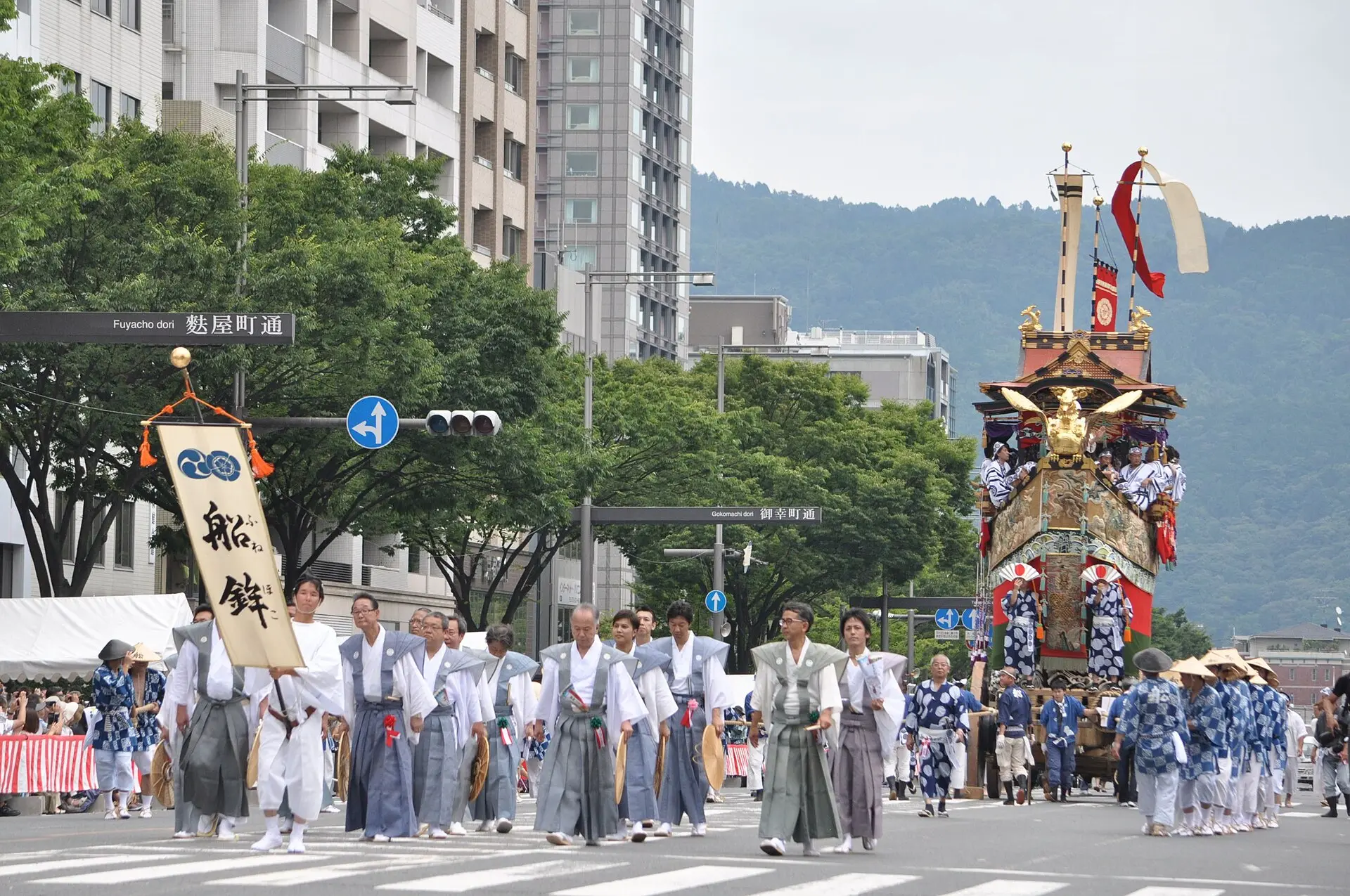
The ship-shaped Funeboko float and attendants in formal kamishimo during the Yamaboko procession
- Photographer
- 江戸村のとくぞう
- Source
- Gion Matsuri 2017-1.jpg(external site, opens in a new tab)
- Licence
- CC BY-SA 4.0(external site, opens in a new tab)
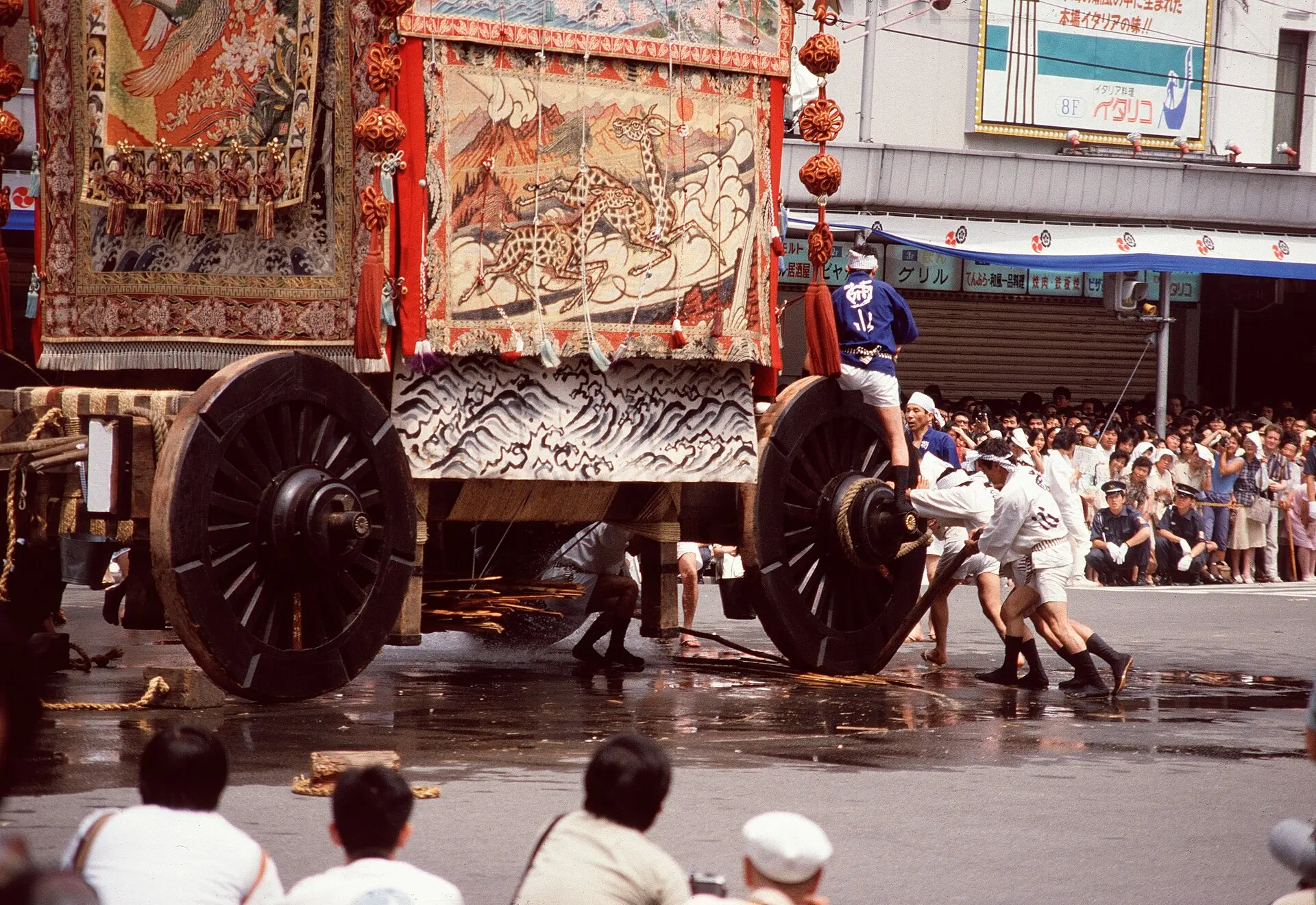
Crew turning a Gion Matsuri float's giant wooden wheels over wet split bamboo in the tsujimawashi
- Photographer
- Marie-Sophie Mejan
- Source
- Kyoto, Gion-matsuri, 9.jpg(external site, opens in a new tab)
- Licence
- CC BY 4.0(external site, opens in a new tab)