Aoi Matsuri (Kamo Festival)葵祭(賀茂祭)
- Prefecture
- Kyoto · Kyoto
- Season
- SPRING
- Type
- Rite
- Typical period
- Annually on May 15 (Roto no Gi procession)
- 2026 Event status
- Period ended
01
IntroductionIntroduction
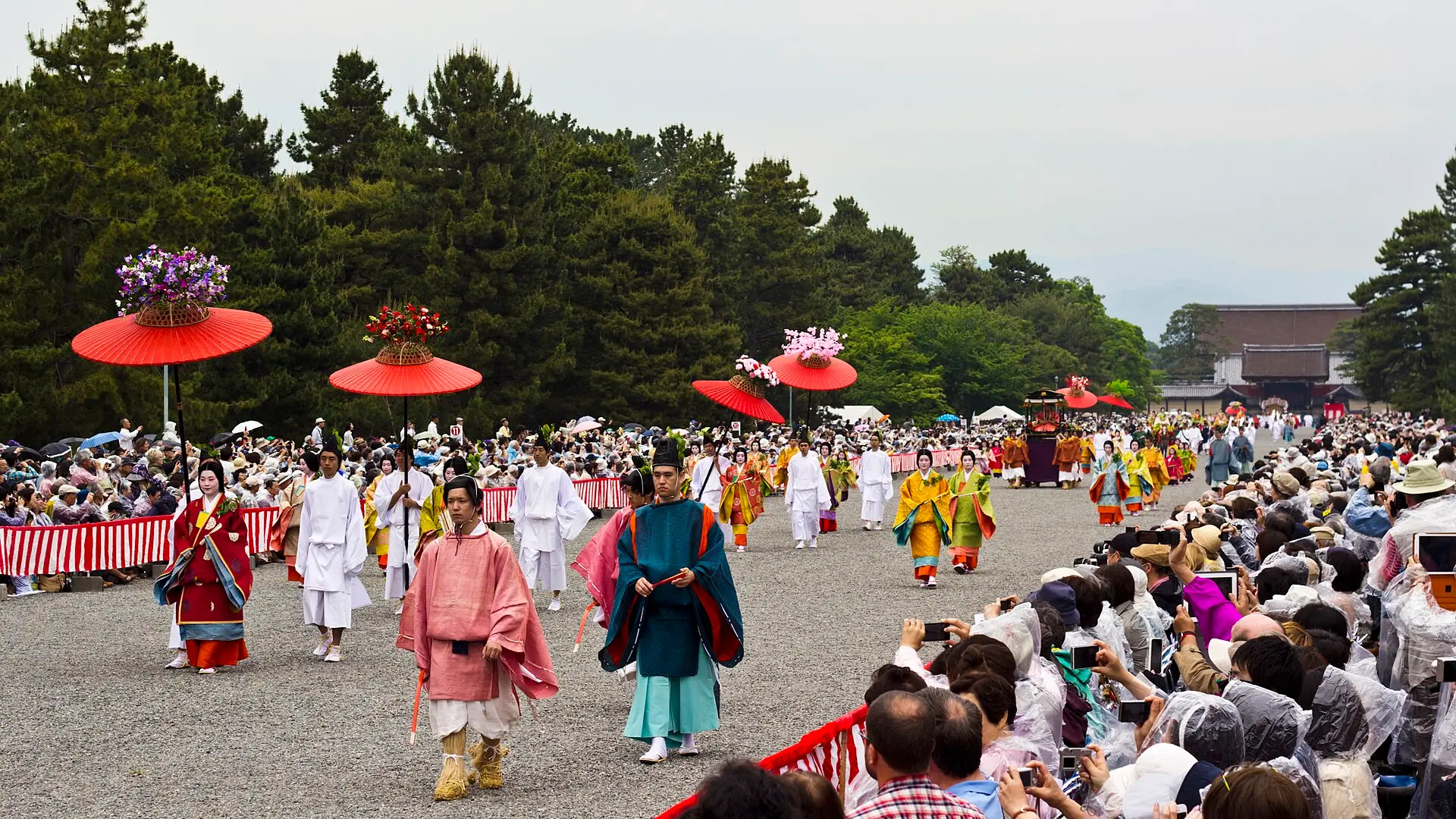
The annual festival of Shimogamo and Kamigamo shrines, known of old as the Kamo Festival. On May 15 a procession in Heian-court dress travels from the Kyoto Imperial Palace to both shrines.
In the Roto no Gi, a procession of more than 500 people with 36 horses, four oxen, two ox-drawn carriages and a palanquin sets out from the Kyoto Imperial Palace and travels some 8 km, first to Shimogamo Shrine and then to Kamigamo Shrine. In the days before, preliminary rites such as yabusame (mounted archery) and the Saiodai's purification are held.
This is a religious rite rooted in a shrine or temple. Please follow the guidance of the organizers and clergy, and take care not to disrupt the ceremonies.
02
HistoryHistory
Shimogamo Shrine relates that the festival began some 1,500 years ago, in 544 (the fifth year of Emperor Kinmei), when poor harvests brought famine and disease that were attributed to the Kamo deities; horses were raced and rites offered to appease them. According to the City of Kyoto, the custom of decorating the procession and shrine buildings with futaba-aoi leaves dates from the festival's revival in 1694.
Source: 賀茂御祖神社(下鴨神社)(external site, opens in a new tab) / 京都市(external site, opens in a new tab)
03
CultureCultural background
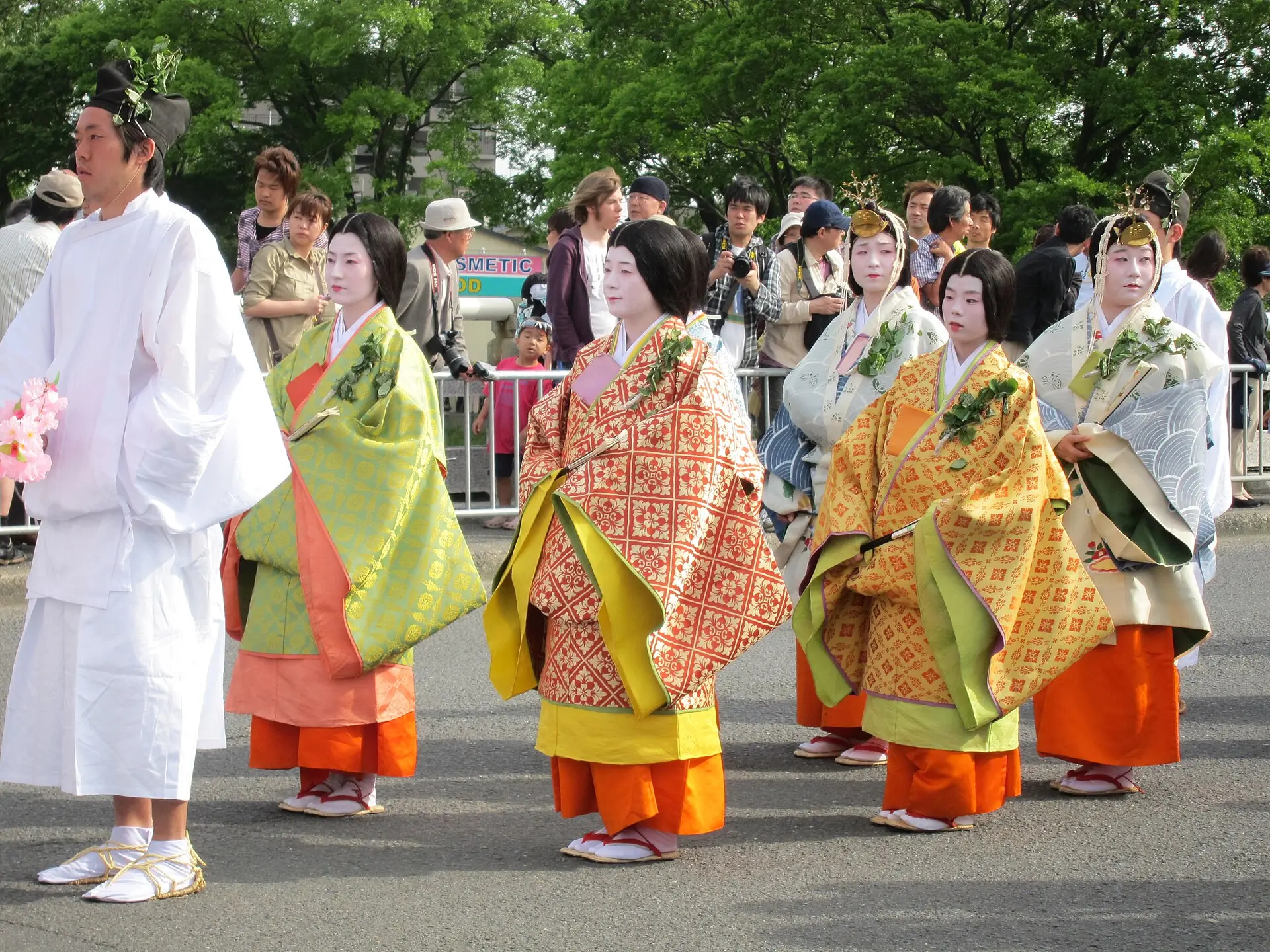
The festival takes its name from the futaba-aoi (hollyhock) leaves that adorn participants, carriages and shrine buildings. Counted with Gion Matsuri and Jidai Matsuri among Kyoto's three great festivals, it carries prayers to the Kamo deities in the dress of the Heian court, with figures such as the Saiodai at its centre.
04
Rites & HighlightsMain rites & highlights
- 01
Roto no Gi
The roughly 8 km procession on May 15 from the Imperial Palace to Shimogamo and Kamigamo shrines.
- 02
Yabusame Shinji
A preliminary rite of mounted archery on the riding ground in Tadasu no Mori at Shimogamo Shrine.
- 03
Saiodai Misogi no Gi
The purification of the Saiodai, held in alternate years at Shimogamo and Kamigamo shrines.
05
ScheduleSchedule
Typical period
Annually on May 15 (Roto no Gi procession)
Source: 京都市(external site, opens in a new tab) / 京都市(external site, opens in a new tab)
2026EVENT STATUS
- Period endedRotō-no-gi procession
Fri, 15 May 2026
Announced to be postponed in case of rain.
Source: 京都市 — 葵祭 路頭の儀 - 【京都市公式】京都観光Navi(external site, opens in a new tab)
Last verified: Sat, 26 September 2026
06
LocationLocation
- Venue
- From the Kyoto Imperial Palace via Shimogamo Shrine to Kamigamo Shrine (Roto no Gi procession)
- Shrine / Host
- Kamo-mioya Jinja (Shimogamo Shrine) and Kamo-wakeikazuchi Jinja (Kamigamo Shrine)
- Region
- Kyoto · Kyoto · Kyoto
07
GalleryGallery
Photo: Japanexperterna / Wikimedia Commons / CC BY-SA 3.0 Photo: Nullumayulife / Wikimedia Commons / CC BY 2.0 Photo: Kok Leng Yeo from Singapore, Singapore / Wikimedia Commons / CC BY 2.0 Photo: Japanexperterna.se / Wikimedia Commons / CC BY-SA 3.0
08
VideosVideos
Kamigamo Shrine's video of the Kamo Festival (Aoi Matsuri) held on May 15.Source: YouTube · 京都 上賀茂神社【世界遺産】(kamigamojinja.official) (Official (organiser)) · Watch on YouTube Kamigamo Shrine's explanatory video about the Kamo Festival (Aoi Matsuri).Source: YouTube · 京都 上賀茂神社【世界遺産】(kamigamojinja.official) (Official (organiser)) · Watch on YouTube
We only include videos confirmed on each organisation's official site or channel, and whose embedding YouTube permits. Playback uses YouTube's official player; copyright remains with the rights holders. The YouTube player does not load until you press play.
09
How to VisitHow to visit
The Roto no Gi is postponed in case of rain, with the decision announced the evening before. Paid seating has been offered by the Kyoto City Tourism Association in some years. Check Kyoto Travel Navi and the shrines' own notices for current details.
Traffic controls, seating and fees change every year. Always check the official website for the latest information.
Official website — shimogamo-jinja.or.jp(external site, opens in a new tab)
10
EtiquetteEtiquette
- Remember that the procession is a Shinto rite and do not obstruct it
- Follow the directions of stewards
11 — Nearby in the region
12 — Related festivals
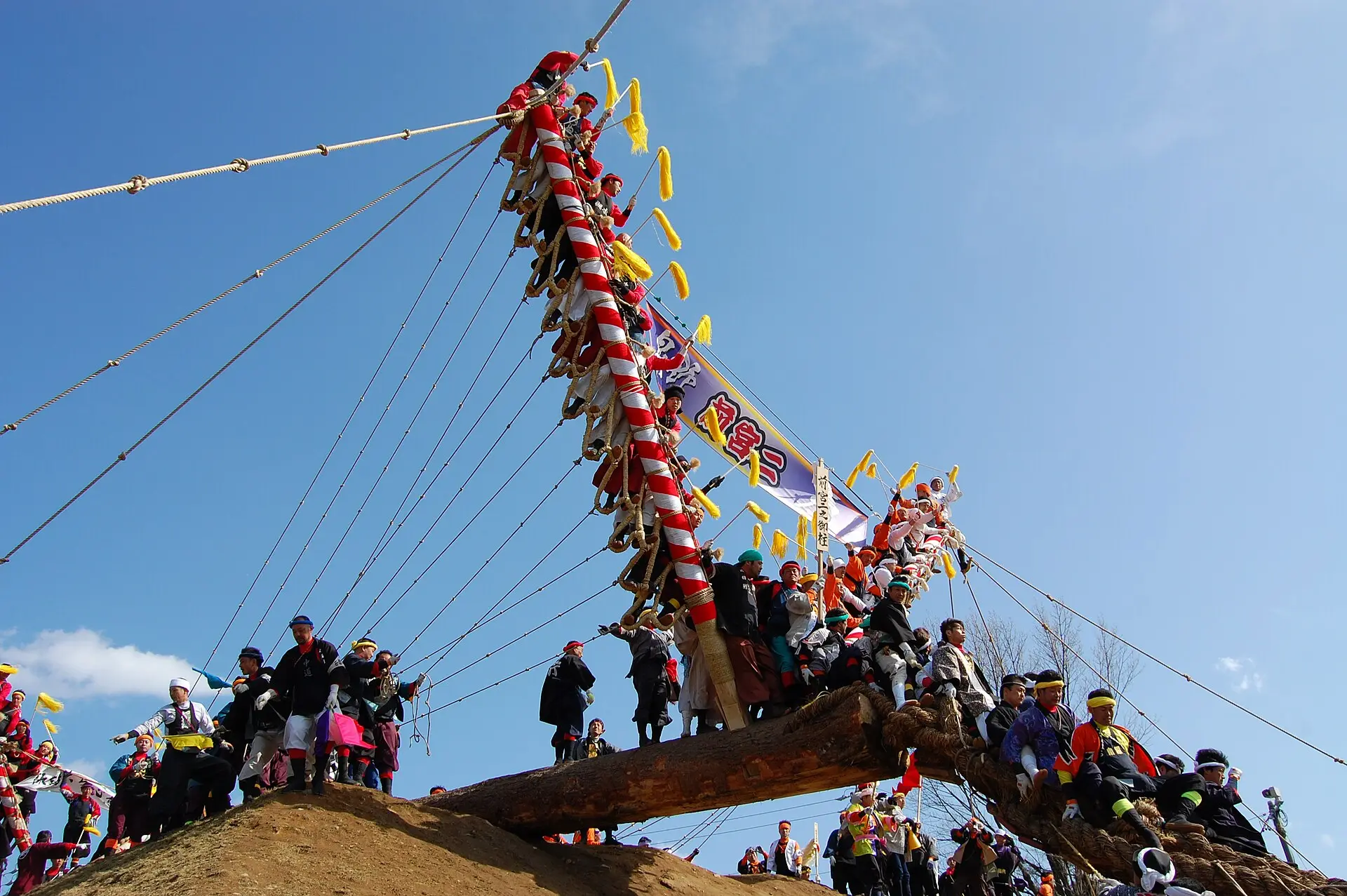
Onbashira Festival of Suwa Taisha
Held every seventh year (counting inclusively), in the Years of the Tiger and the Monkey; the Yamadashi takes place in April and the Satobiki in May
Sanja Matsuri
The Friday, Saturday and Sunday around the third Saturday of May
Kanda Matsuri
Mid-May (the full festival with the divine procession is held every two years; the grand rite falls on May 15)
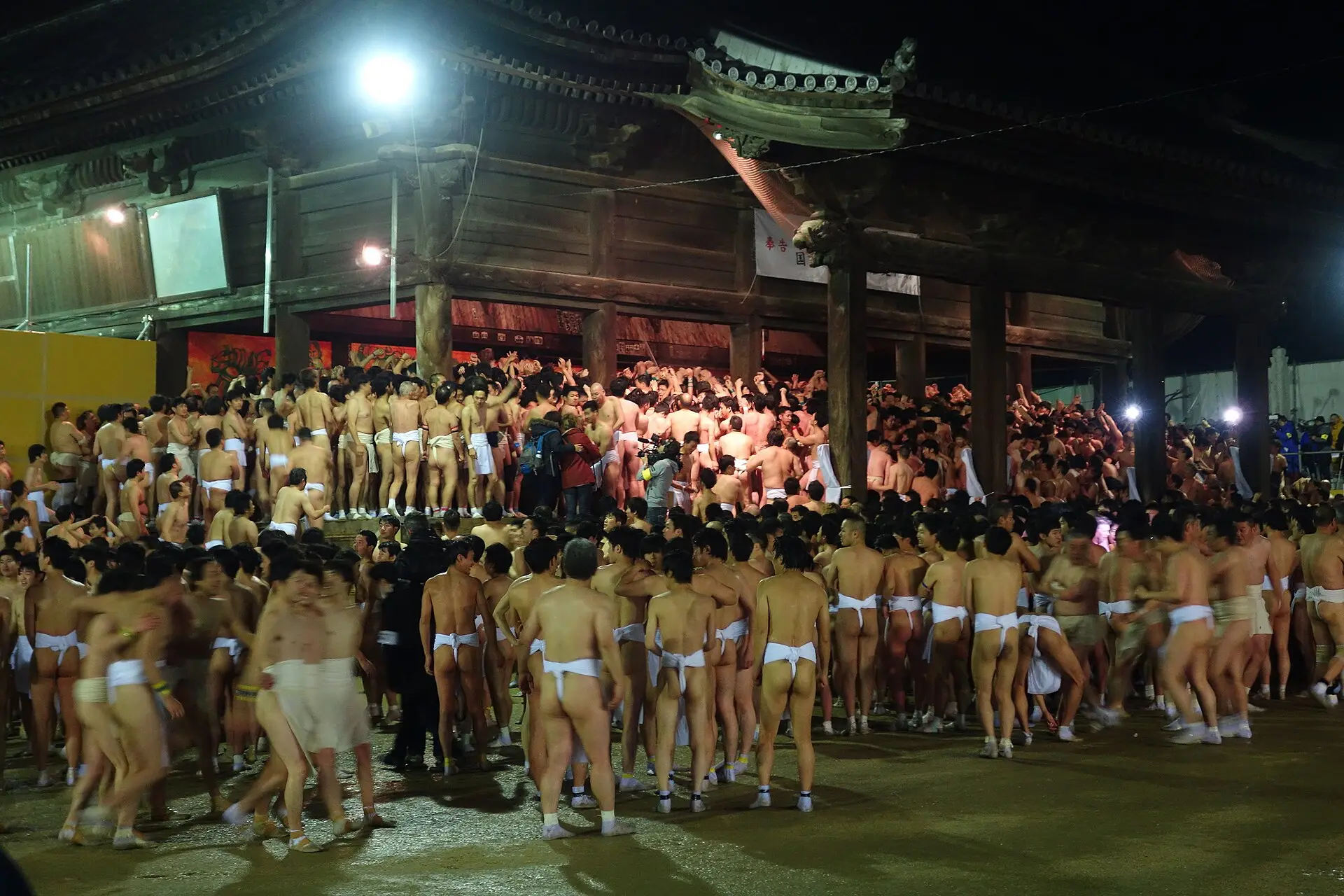
Saidaiji Eyo (Naked Festival)
Annually on the third Saturday of February
13
SourcesSources & references
- 1.賀茂祭(葵祭)のご案内 | 下鴨神社 | 賀茂御祖神社(external site, opens in a new tab)賀茂御祖神社(下鴨神社) · Accessed 2026-09-26
- 2.葵祭「深く知る」|【京都市公式】京都観光Navi(external site, opens in a new tab)京都市 · Accessed 2026-09-26
- 3.葵祭 路頭の儀 - 【京都市公式】京都観光Navi(external site, opens in a new tab)京都市 · Accessed 2026-09-26
14
Image CreditsImage credits
The Aoi Matsuri procession with red parasols and Heian court costumes crossing the Kyoto Imperial Palace grounds
- Photographer
- Japanexperterna
- Source
- Aoi Matsuri.jpg(external site, opens in a new tab)
- Licence
- CC BY-SA 3.0(external site, opens in a new tab)
Women in layered Heian-era robes walking in the Aoi Matsuri procession
- Photographer
- Nullumayulife
- Source
- Aoi matsuri festival in Kyoto, Japan 2011-05-15.jpg(external site, opens in a new tab)
- Licence
- CC BY 2.0(external site, opens in a new tab)
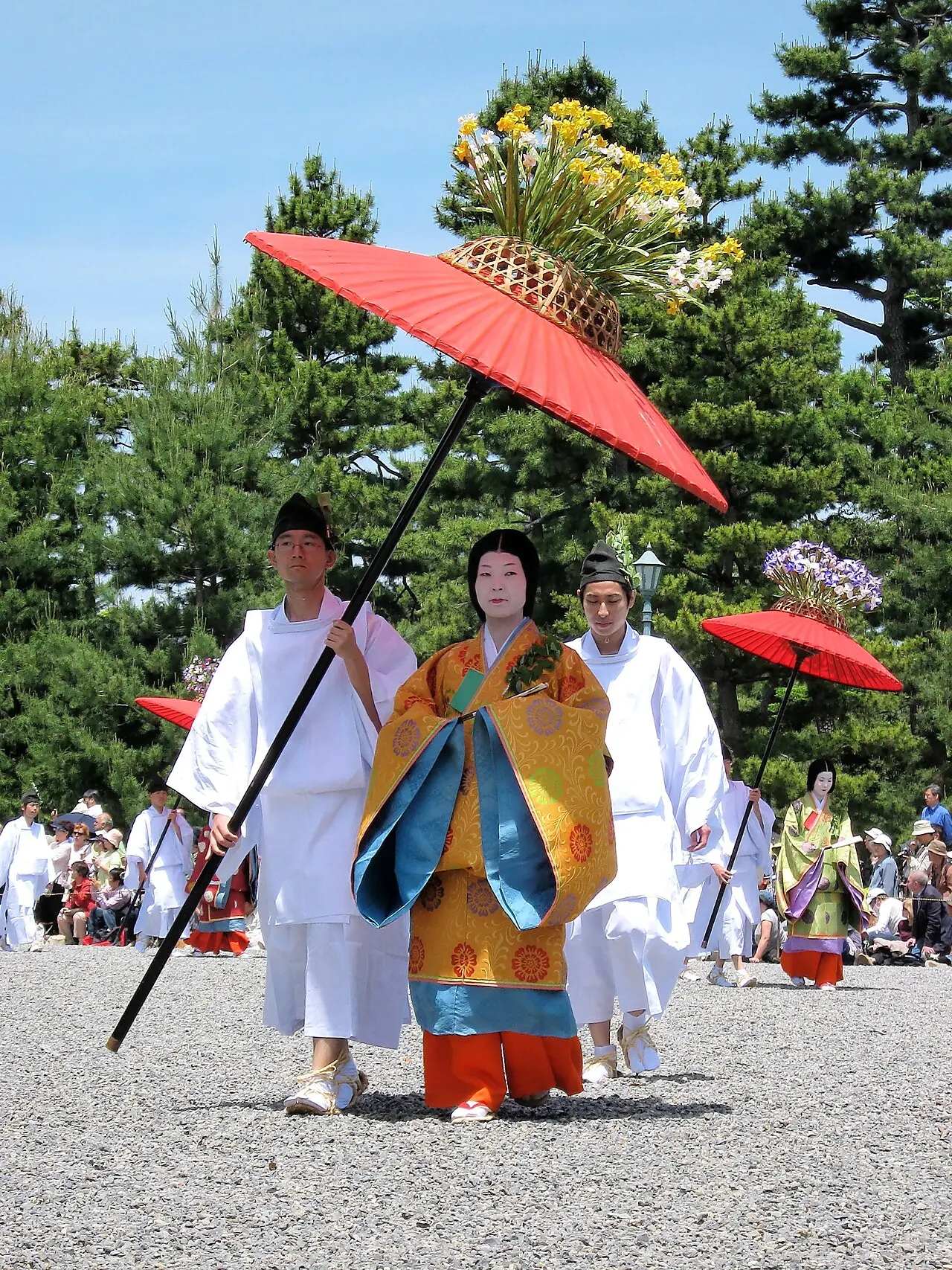
A court lady in layered robes walking beneath a red parasol held by an attendant
- Photographer
- Kok Leng Yeo from Singapore, Singapore
- Source
- Flickr - yeowatzup - Aoi Matsuri, Imperial Palace, Kyoto, Japan (9).jpg(external site, opens in a new tab)
- Licence
- CC BY 2.0(external site, opens in a new tab)
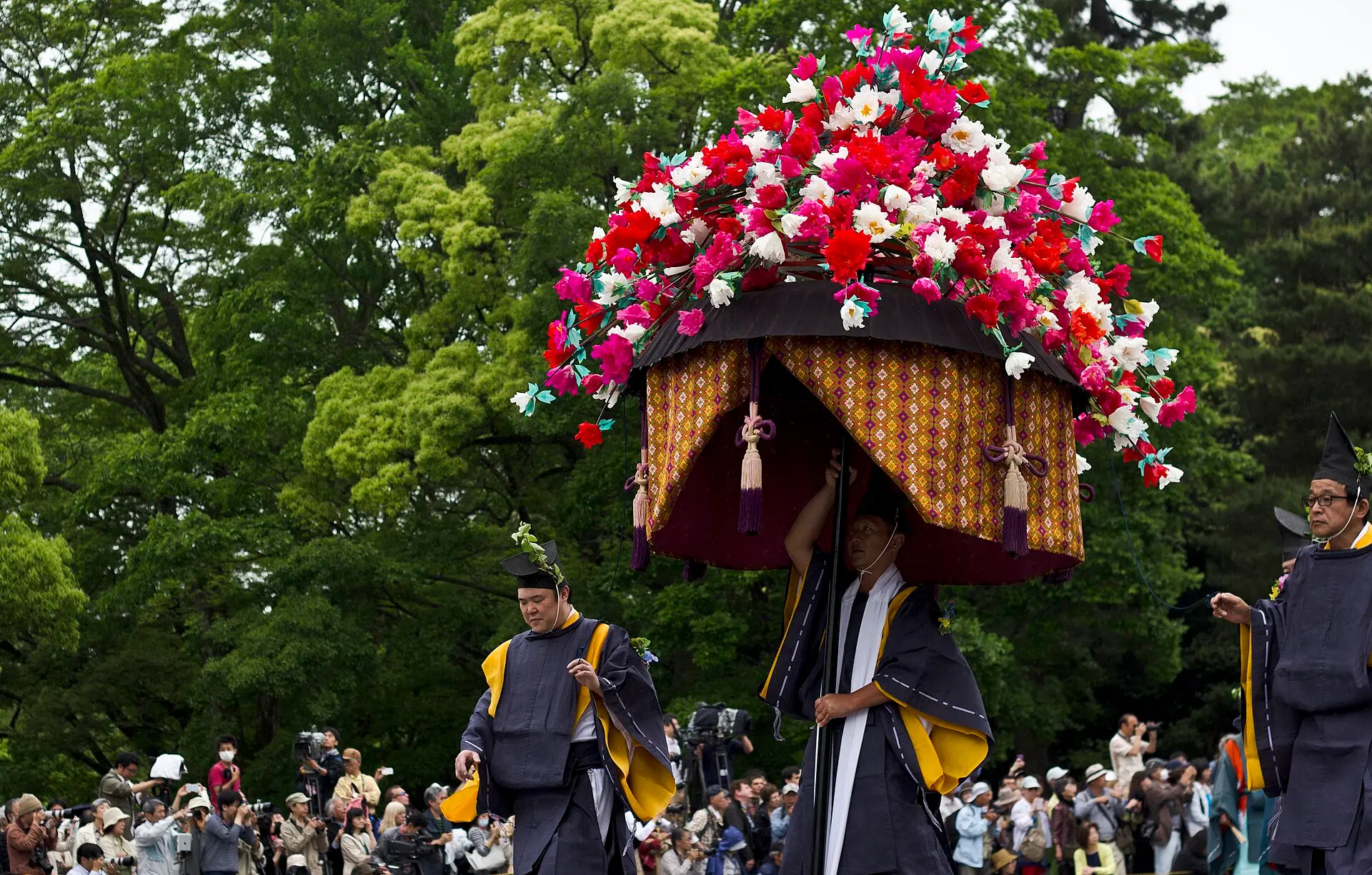
A furyu-gasa parasol heaped with red and white flowers carried in the Aoi Matsuri procession
- Photographer
- Japanexperterna.se
- Source
- Aoix2.jpg(external site, opens in a new tab)
- Licence
- CC BY-SA 3.0(external site, opens in a new tab)