FESTIVALS · 2 min read
Gion Matsuri: a thousand summers
Photo: Sakurai Midori / Wikimedia Commons / CC BY-SA 3.0
From a rite to quell epidemics to floats adorned by the townspeople — a month of Kyoto summer carries the memory of prayer.
According to Yasaka Shrine, the festival began in 869, when epidemics swept the capital and other provinces: sixty-six halberds — one for each province of the time — were raised, and portable shrines were sent from Gion-sha to the Shinsen-en garden in prayer for deliverance. The rite was first known as goryō-e.
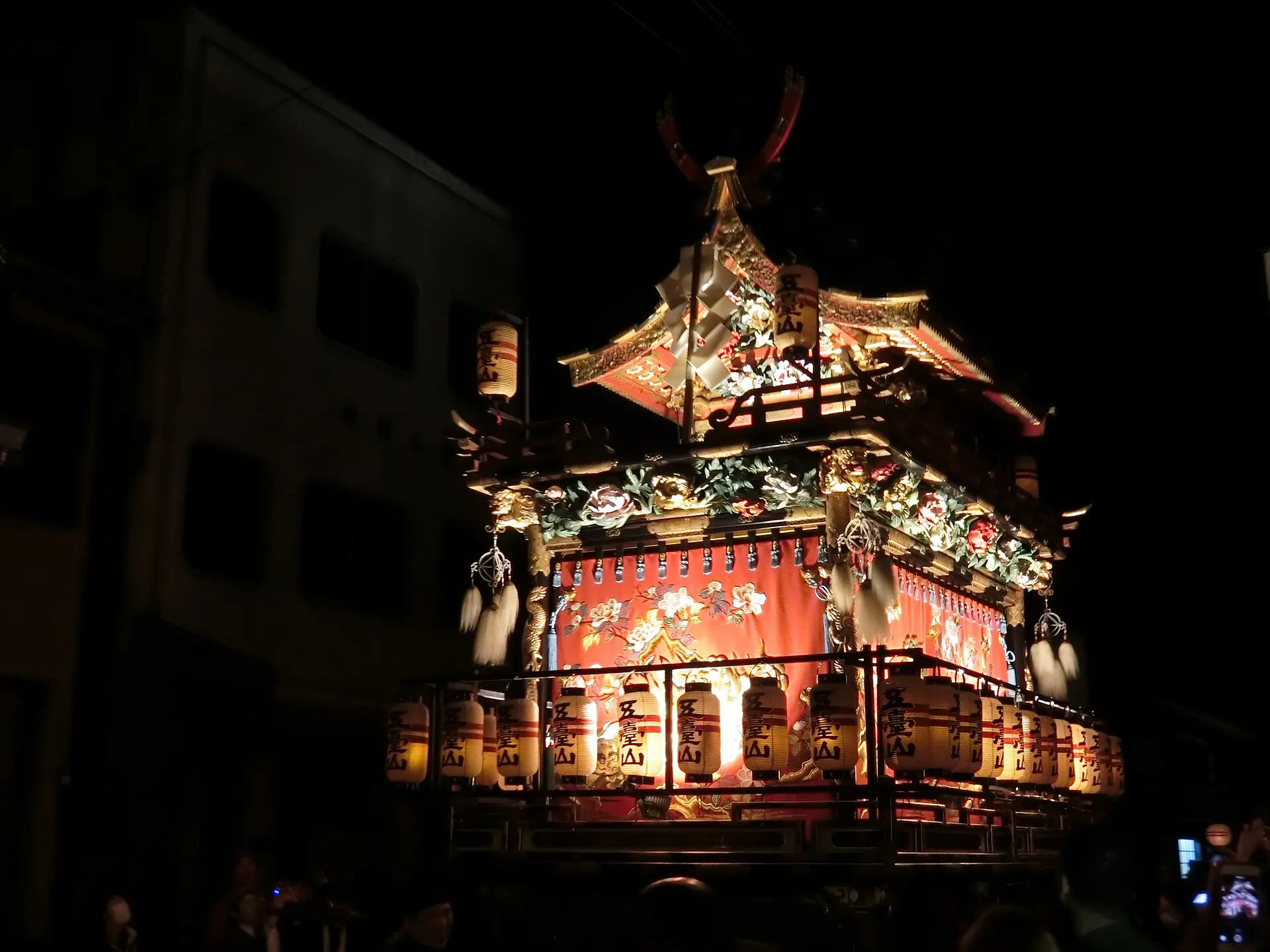
The Agency for Cultural Affairs explains that the festival took shape as a procession of yama and hoko floats in the fourteenth and fifteenth centuries, and that by the late sixteenth century the townspeople were adorning them with sumptuous textiles and metalwork.
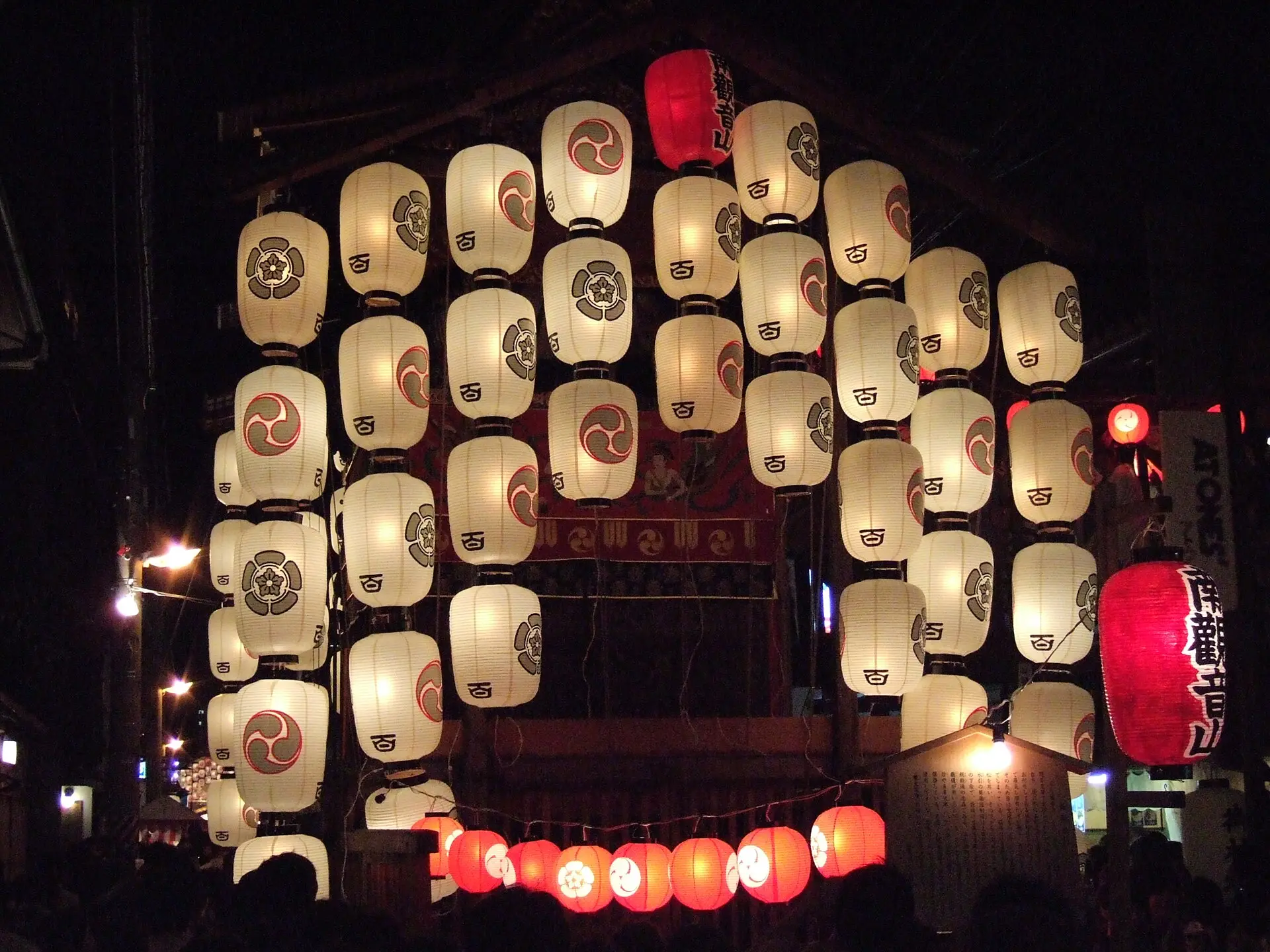
The rites begin with Kippu-iri on July 1 and continue through Yoiyama, the first and second float processions and the procession of the portable shrines, closing with the Ekijinja Nagoshi-sai on July 31. From the lottery that sets the order of the procession to the building of the floats, the float rites are carried by each neighbourhood's own organisation, the chōjū.
The 'Float Ceremony of the Kyoto Gion Festival' is a national Important Intangible Folk Cultural Property; it was inscribed on UNESCO's list in 2009 and extended in 2016 as part of 'Yama, Hoko, Yatai'. Beneath the splendour of the procession lies, still, a prayer to keep epidemic and misfortune at bay.
Related festivals
Sources & references
- 1.祇園祭|主な神事・行事|八坂神社(external site, opens in a new tab)八坂神社
- 2.祇園祭「どんな祭?」|【京都市公式】京都観光Navi(external site, opens in a new tab)京都市
- 3.祇園祭山鉾巡行(前祭・後祭)|【京都市公式】京都観光Navi(external site, opens in a new tab)京都市
- 4.京都祇園祭の山鉾行事 - 文化遺産オンライン(external site, opens in a new tab)文化庁
- 5.祇園祭山鉾 - 文化遺産オンライン(external site, opens in a new tab)文化庁
- 6.「山・鉾・屋台行事」のユネスコ無形文化遺産登録(代表一覧表記載)について(external site, opens in a new tab)文化庁
Read more