Season — 冬
WINTER
Winter
Snow, fire and stillness. Winter rites kindle light in the harshest season.
- Licensed photography is being verified
01 — Hokkaido
Sapporo Snow Festival
Sapporo's winter festival, which began in 1950 when local junior and senior high school students set up six snow statues in Odori Park; it is now held across three sites — Odori, Tsudome and Susukino.
- Licensed photography is being verified
02 — Akita
Yokote Kamakura Snow Festival
A Little New Year (koshōgatsu) observance in Yokote in which the water deity is enshrined at the back of snow chambers called kamakura; it is said to have a history of about 450 years.
Typically: Since 2026, the second Friday and Saturday of February
- Licensed photography is being verified
03 — Saitama
Chichibu Night Festival
The grand annual festival of Chichibu Shrine, known for the hauling of its kasaboko and yatai floats, kabuki staged on the floats and fireworks in the winter sky. As "Chichibu Matsuri no Yatai Gyōji to Kagura" it is a national Important Intangible Folk Cultural Property and one of the UNESCO-inscribed "Yama, Hoko, Yatai, float festivals in Japan."
Typically: Annually, December 2 (eve) and December 3 (main festival)
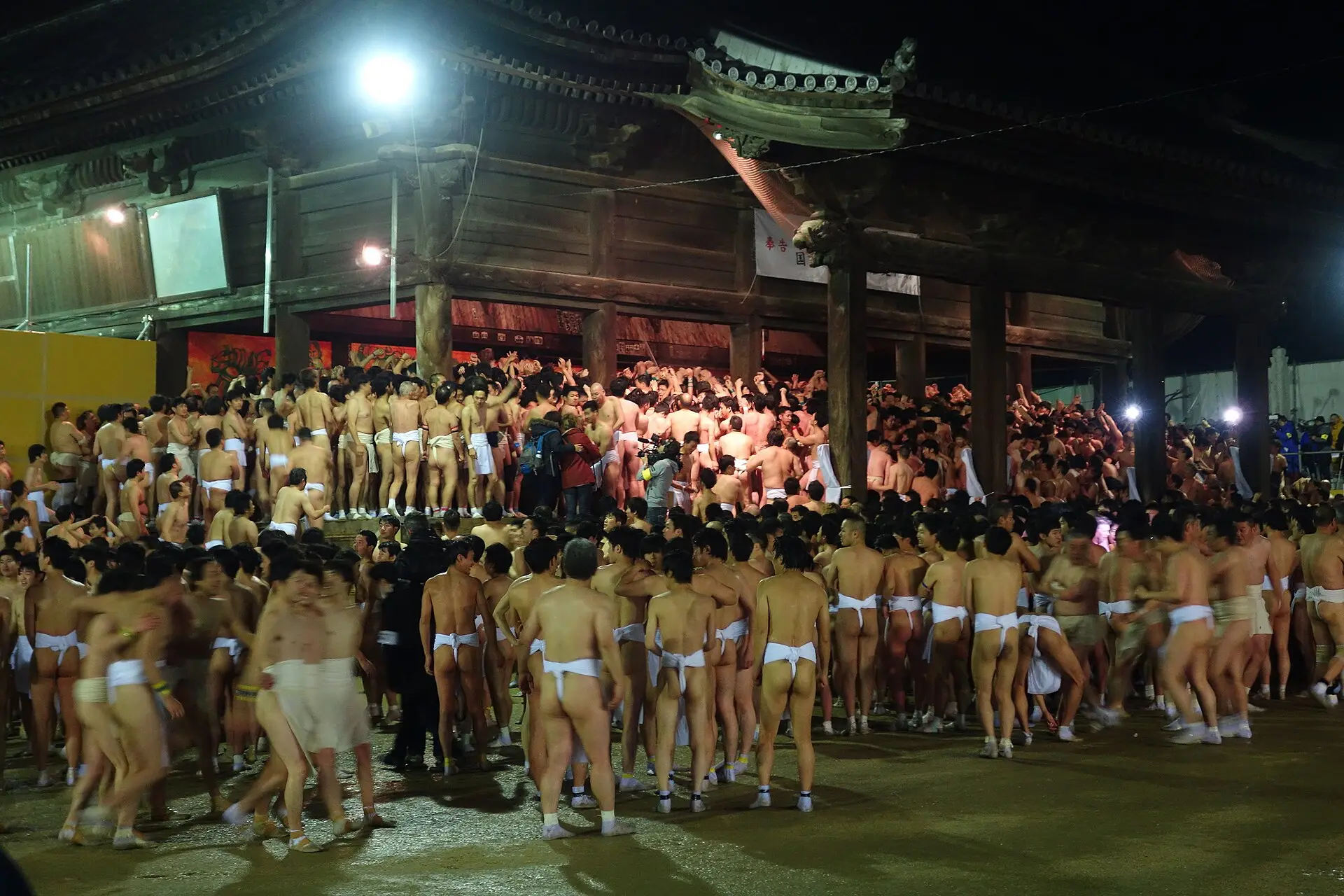
04 — Okayama
Saidaiji Eyo (Naked Festival)
A New Year naked festival of Saidaiji Kannon-in. On the night that concludes the Shushoe rites, men in loincloths contend for sacred wooden talismans (shingi) cast down from the main hall.
Typically: Annually on the third Saturday of February
- Licensed photography is being verified
05 —
Hatsumōde (First Shrine or Temple Visit of the New Year)
The custom of visiting a Shinto shrine or Buddhist temple at the start of the new year. Worship manners differ between shrines and temples, and individual sites may have their own practices, so it is important to follow each shrine's or temple's own guidance.
Typically: Commonly said to be from New Year's Day through the first three days of January
- Licensed photography is being verified
06 —
Joya no Kane (New Year's Eve Temple Bells)
A Buddhist year-end rite in which temple bells are rung on New Year's Eve to mark the passage from the old year to the new. The bell is commonly struck 108 times, a number generally said to represent human worldly desires (bonnō).
Typically: On New Year's Eve night (joya), into the new year
- Licensed photography is being verified
07 —
Setsubun (Eve of the Beginning of Spring)
Originally the turning points between the four seasons — in the calendar, the day before the start of spring, summer, autumn and winter. Today it usually means the day before the start of spring, known for scattering beans while chanting 'Oni wa soto, fuku wa uchi' ('Demons out, fortune in').
Typically: The day before Risshun, the start of spring (often February 3, but some years February 2)