Joya no Kane (New Year's Eve Temple Bells)除夜の鐘
- Season
- WINTER
- Type
- New Year
- Typical period
- On New Year's Eve night (joya), into the new year
- 2026 Event status
- Not announced
01
IntroductionIntroduction
A Buddhist year-end rite in which temple bells are rung on New Year's Eve to mark the passage from the old year to the new. The bell is commonly struck 108 times, a number generally said to represent human worldly desires (bonnō).
Each strike is said to dispel a worldly desire so one can greet the new year with a clear heart; the bells of New Year's Eve are part of Japan's year-end soundscape.
This is a religious rite rooted in a shrine or temple. Please follow the guidance of the organizers and clergy, and take care not to disrupt the ceremonies.
02
HistoryHistory
The custom is said to derive from the '108 bells' of Song-dynasty China, introduced to Japan and established at temples in the medieval period.
03
CultureCultural background
The 108 strikes are generally said to correspond to the number of worldly desires, and ringing the bell is said to dispel them before the new year. Another explanation derives 108 from 4×9 plus 8×9, alluding to the Buddhist 'four and eight kinds of suffering'. How and when the bell is rung varies by temple; many strike 107 times in the old year and the final strike after midnight.
04
Rites & HighlightsMain rites & highlights
- 01
108 strikes
The bell is struck 108 times, commonly said to equal the number of worldly desires.
- 02
The final strike across midnight
Many temples are said to strike 107 times before midnight and the last once the new year has begun.
05
ScheduleSchedule
Typical period
On New Year's Eve night (joya), into the new year
2026EVENT STATUS
We have not found an official announcement. We never estimate this year's dates from previous years — please check the official website for the latest information.
06
How to VisitHow to visit
Whether visitors may ring the bell, the timing and the number of strikes differ by temple, so check the guidance of the temple you plan to visit.
Traffic controls, seating and fees change every year. Always check the official website for the latest information.
07
EtiquetteEtiquette
- Follow each temple's own guidance and practices
08 — Related festivals
Hatsumōde (First Shrine or Temple Visit of the New Year)
Commonly said to be from New Year's Day through the first three days of January
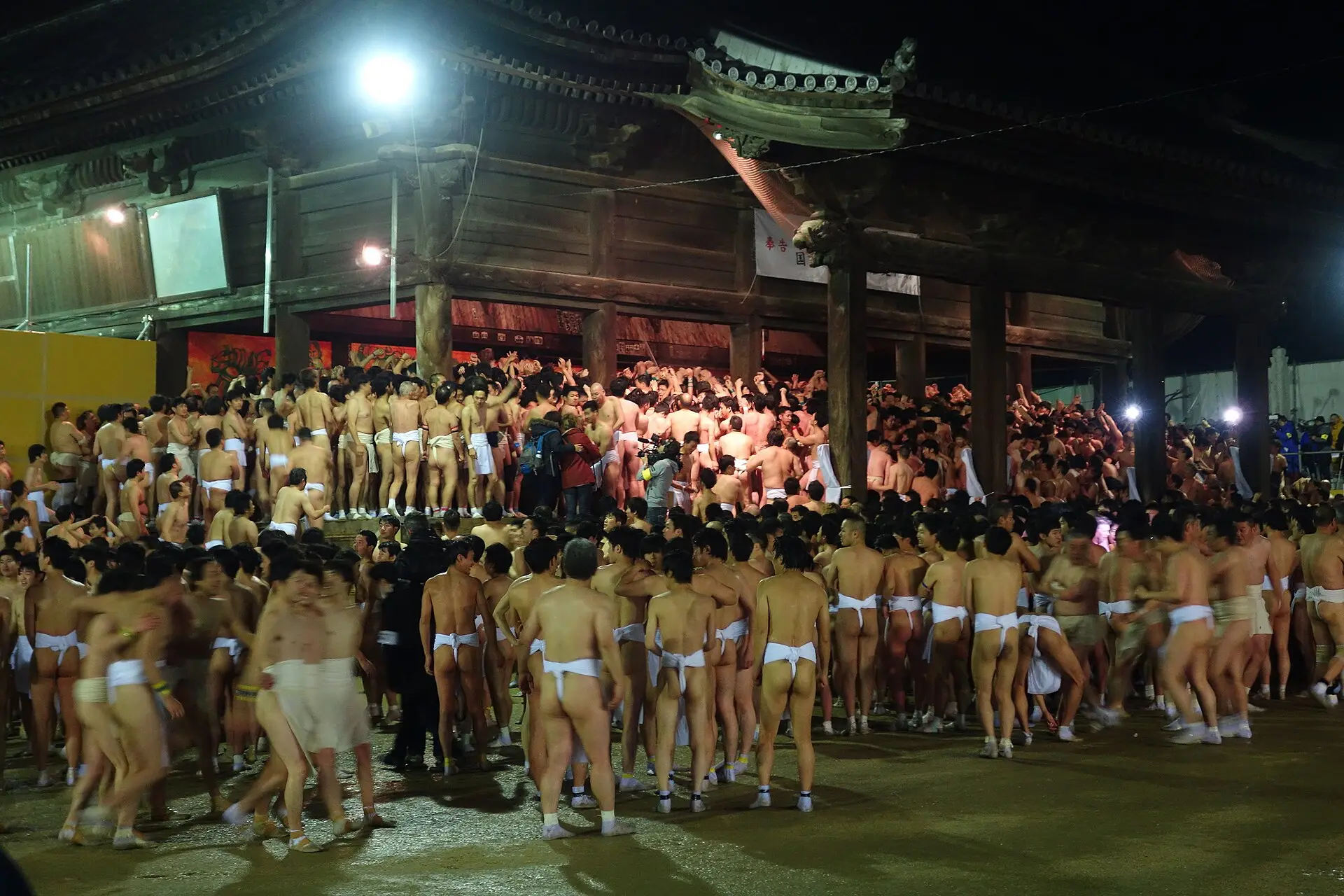
Saidaiji Eyo (Naked Festival)
Annually on the third Saturday of February
Sapporo Snow Festival
Yokote Kamakura Snow Festival
Since 2026, the second Friday and Saturday of February
09
SourcesSources & references
- 1.除夜の鐘は何故108回?(external site, opens in a new tab)法界山 誓欣院 · Accessed 2026-09-26