Awa Odori阿波おどり
- Prefecture
- Tokushima · Tokushima
- Season
- SUMMER
- Type
- Dance
- Typical period
- Annually for four days, August 12–15
- 2026 Event status
- Period ended
01
IntroductionIntroduction
A traditional performing art of Tokushima said to have more than 400 years of history. For four days over Obon, the centre of Tokushima City is given over to dance.
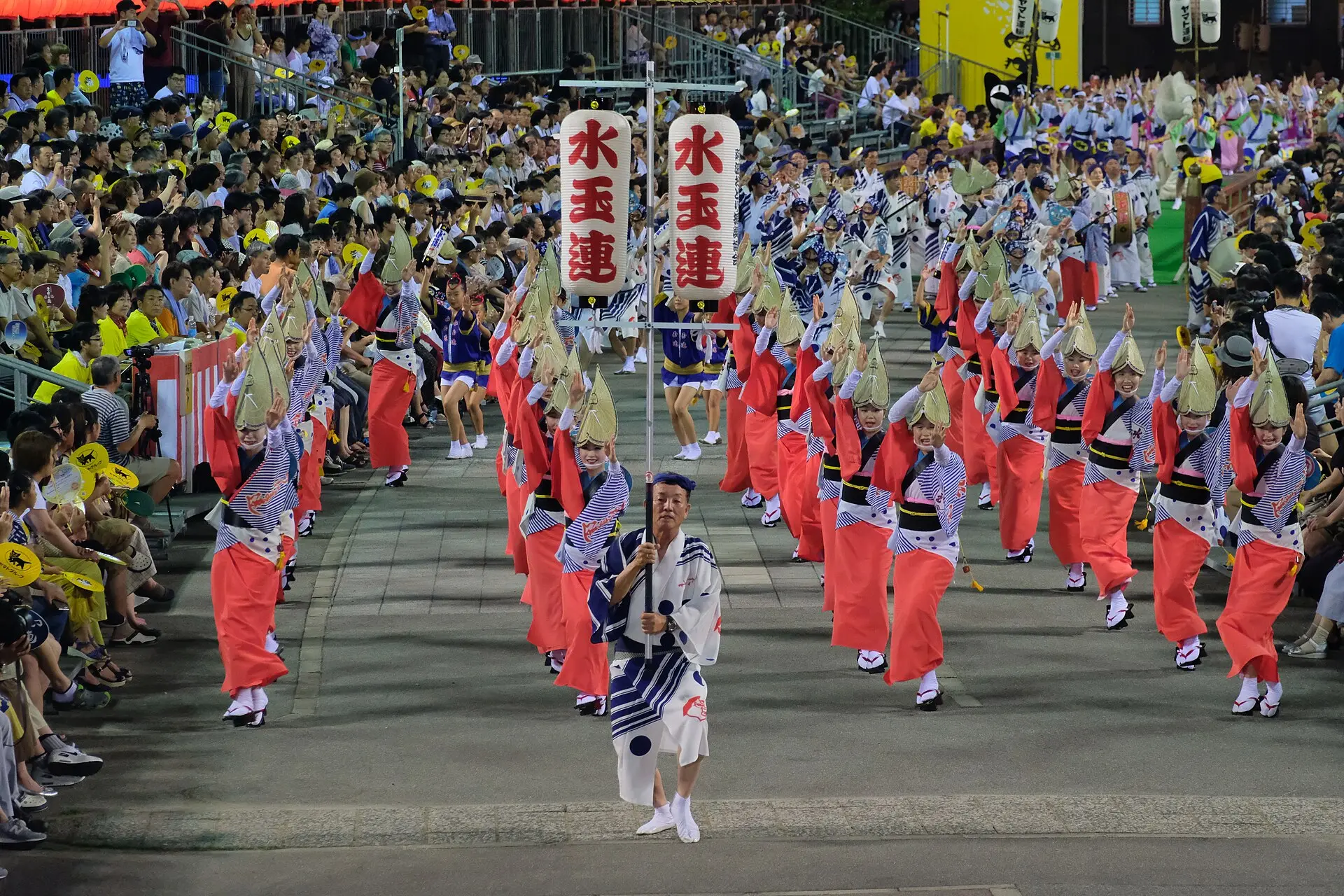
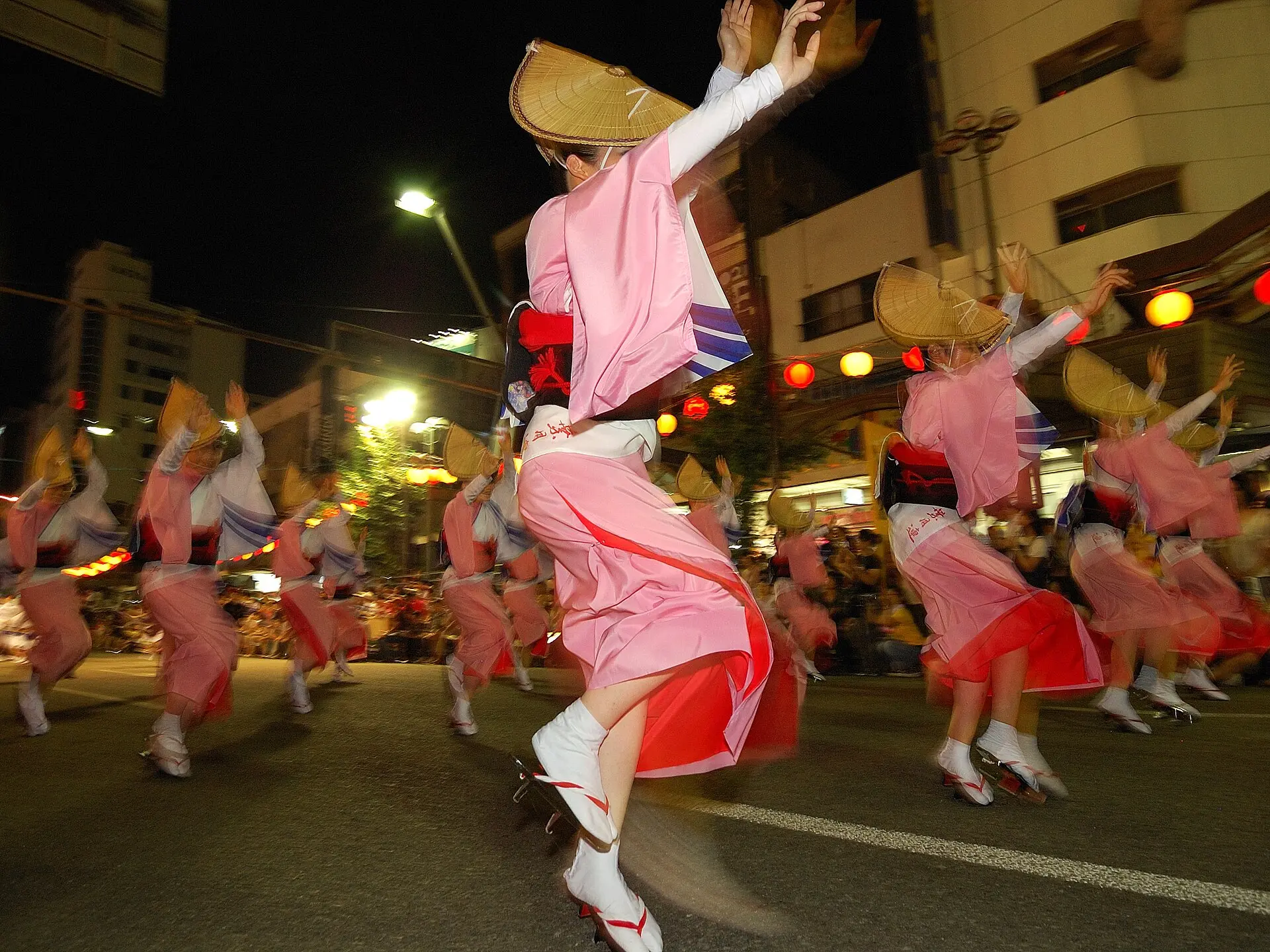
Awa Odori is Tokushima's traditional dance, performed by groups called ren who dance their way forward to an ensemble led by the shamisen, with large and small drums, gongs, flutes and hand drums. Ren range from long-established famous groups to company and student troupes. In Tokushima City the dancing fills performance venues and dance plazas across the centre every year from August 12 to 15.
02
HistoryHistory
Tokushima Prefecture presents several theories of origin: that townspeople danced to celebrate the completion of Tokushima Castle by Hachisuka Iemasa in 1587; that it derives from a furyu dance held at Shozui Castle in 1578, as recorded in the 1663 chronicle Miyoshi-ki; and that it grew out of the Bon dances of the seventh lunar month.
Source: 徳島県(external site, opens in a new tab) / 徳島市(external site, opens in a new tab)
03
CultureCultural background
As the Bon-dance theory of its origin suggests, Awa Odori has long been danced at Obon. Ren are formed around neighbourhoods, workplaces and schools, each carrying on its own style of dance and music.
04
Rites & HighlightsMain rites & highlights
- 01
Ren dancing through the venues
Each ren dances its way through the venues with its musicians.
- 02
Narimono (musical accompaniment)
Shamisen, large and small drums, gongs, flutes and hand drums drive the dance.
- 03
Performance venues and dance plazas
Paid and free performance venues and open dance plazas are set up around the city.
05
PeopleThe people
Dancers perform in groups called ren.
06
ScheduleSchedule
2026EVENT STATUS
- Period ended
Wed, 12 August 2026 – Sat, 15 August 2026
Source: 阿波おどり未来へつなぐ実行委員会 — 2026 開催スケジュール | The Awaodori(external site, opens in a new tab)
Last verified: Sat, 26 September 2026
07
LocationLocation
- Venue
- Performance venues and dance plazas in central Tokushima (Aibahama venue and others)
- Shrine / Host
- Awa Odori Mirai e Tsunagu Executive Committee (organiser in 2026)
- Region
- Shikoku · Tokushima · Tokushima
08
GalleryGallery
Photo: Ann Lee / Wikimedia Commons / CC BY-SA 2.0 Photo: Rosino / Wikimedia Commons / CC BY-SA 2.0 Photo: Rosino / Wikimedia Commons / CC BY-SA 2.0 Photo: いんだそ / Wikimedia Commons / CC BY-SA 4.0
09
VideosVideos
Official stream of the August 15, 2026 Awa Odori by the Awa Odori organizing committee.Source: YouTube · 阿波おどり未来へつなぐ実行委員会 (Official (organiser)) · Watch on YouTube Official stream of the August 12, 2026 Awa Odori by the Awa Odori organizing committee.Source: YouTube · 阿波おどり未来へつなぐ実行委員会 (Official (organiser)) · Watch on YouTube
We only include videos confirmed on each organisation's official site or channel, and whose embedding YouTube permits. Playback uses YouTube's official player; copyright remains with the rights holders. The YouTube player does not load until you press play.
10
How to VisitHow to visit
There are paid venues (such as Aibahama, Minami-Uchimachi and Konyamachi), free venues and open dance plazas, all within walking distance of JR Tokushima Station. The organising committee announces decisions on weather-related changes, so check the official site for the latest information.
Traffic controls, seating and fees change every year. Always check the official website for the latest information.
Official website — awaodorimirai.com(external site, opens in a new tab)
11
EtiquetteEtiquette
- Do not obstruct the dancers
- Follow the directions of stewards
12 — Nearby in the region

14
SourcesSources & references
- 1.阿波おどり|ようこそ徳島県へ(external site, opens in a new tab)徳島県 · Accessed 2026-09-26
- 2.阿波おどり:徳島市公式ウェブサイト(external site, opens in a new tab)徳島市 · Accessed 2026-09-26
- 3.2026 開催スケジュール | The Awaodori(external site, opens in a new tab)阿波おどり未来へつなぐ実行委員会 · Accessed 2026-09-26
- 4.徳島市阿波おどり THE AWAODORI | 徳島県観光情報サイト阿波ナビ(external site, opens in a new tab)徳島県観光協会 · Accessed 2026-09-26
- 5.「風流踊」のユネスコ無形文化遺産登録(代表一覧表記載)(external site, opens in a new tab)文化庁 · Accessed 2026-09-26
15
Image CreditsImage credits
The Mizutamaren troupe dances in formation beneath lantern banners at the Awa Odori in Tokushima
Women dancers in pink kimono and straw amigasa hats move mid-step through a Tokushima street at night
- Photographer
- Rosino
- Source
- Awa-odori 2008 Tokushima.jpg(external site, opens in a new tab)
- Licence
- CC BY-SA 2.0(external site, opens in a new tab)
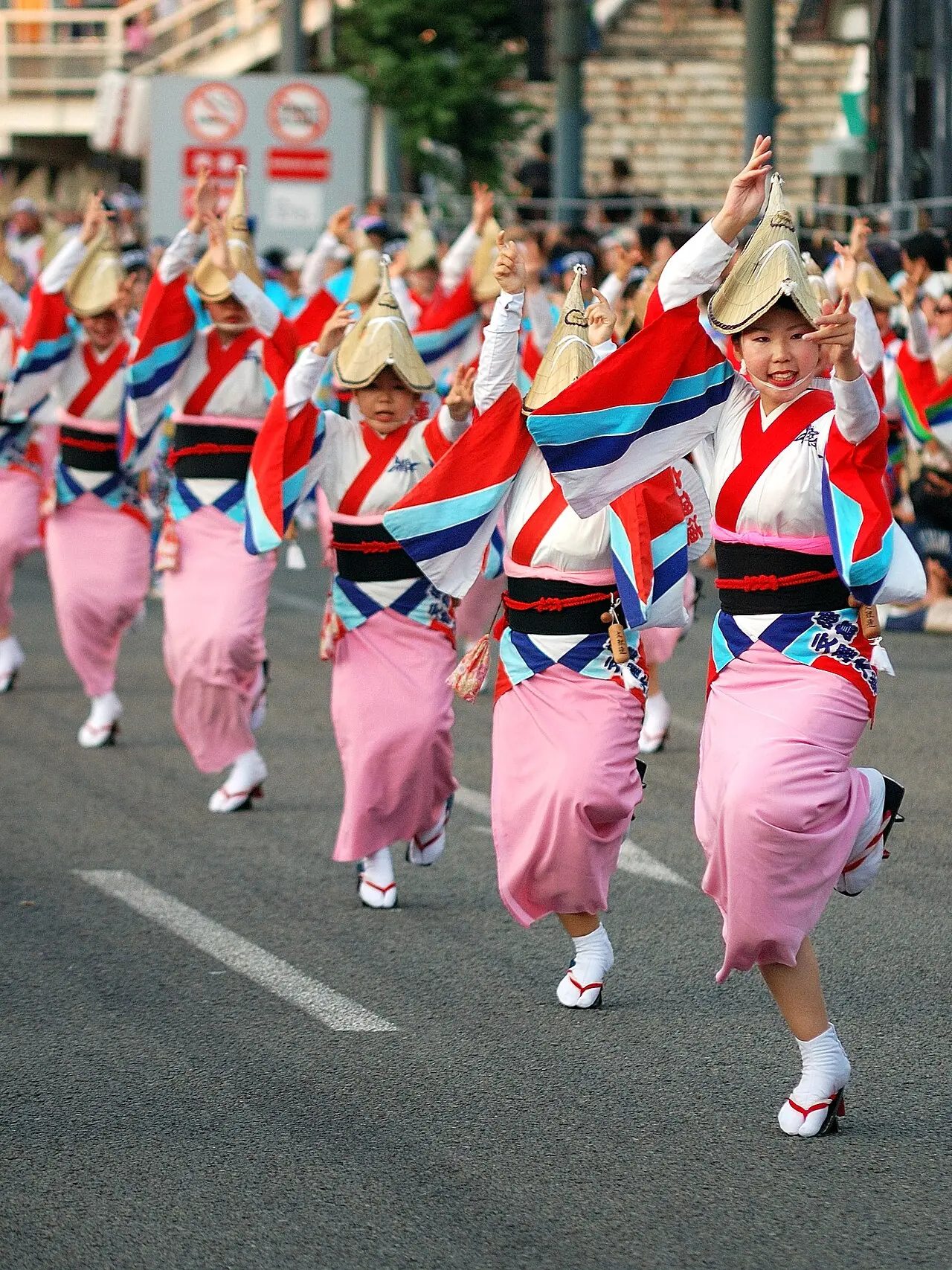
A line of Awa Odori women dancers in straw hats raising their hands in unison
- Photographer
- Rosino
- Source
- Awa-odori 2008 Tokushima 03.jpg(external site, opens in a new tab)
- Licence
- CC BY-SA 2.0(external site, opens in a new tab)
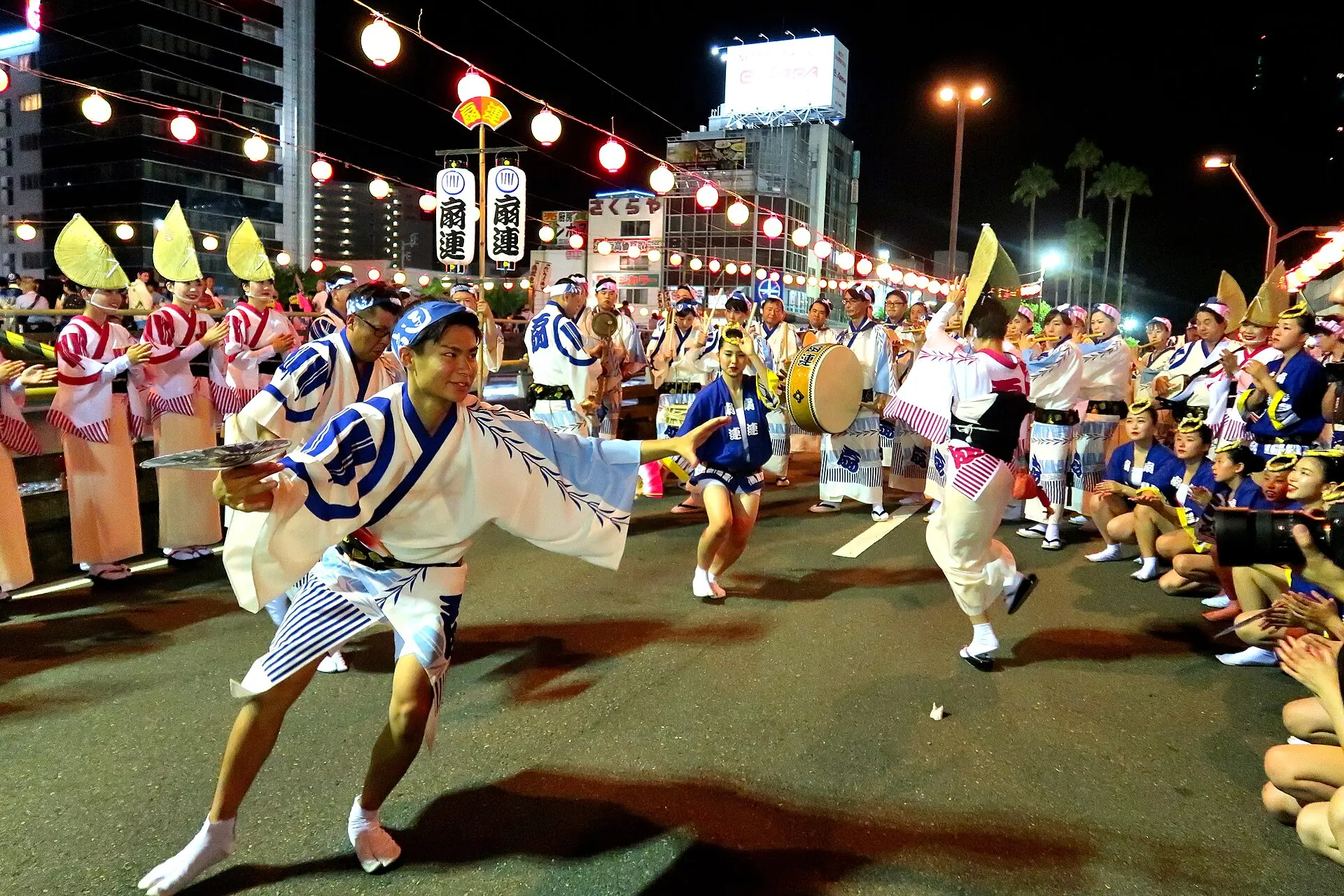
Male Awa Odori dancers improvise beneath strings of paper lanterns in Tokushima at night
- Photographer
- いんだそ
- Source
- 徳島県徳島市 自由な阿波踊り.jpg(external site, opens in a new tab)
- Licence
- CC BY-SA 4.0(external site, opens in a new tab)